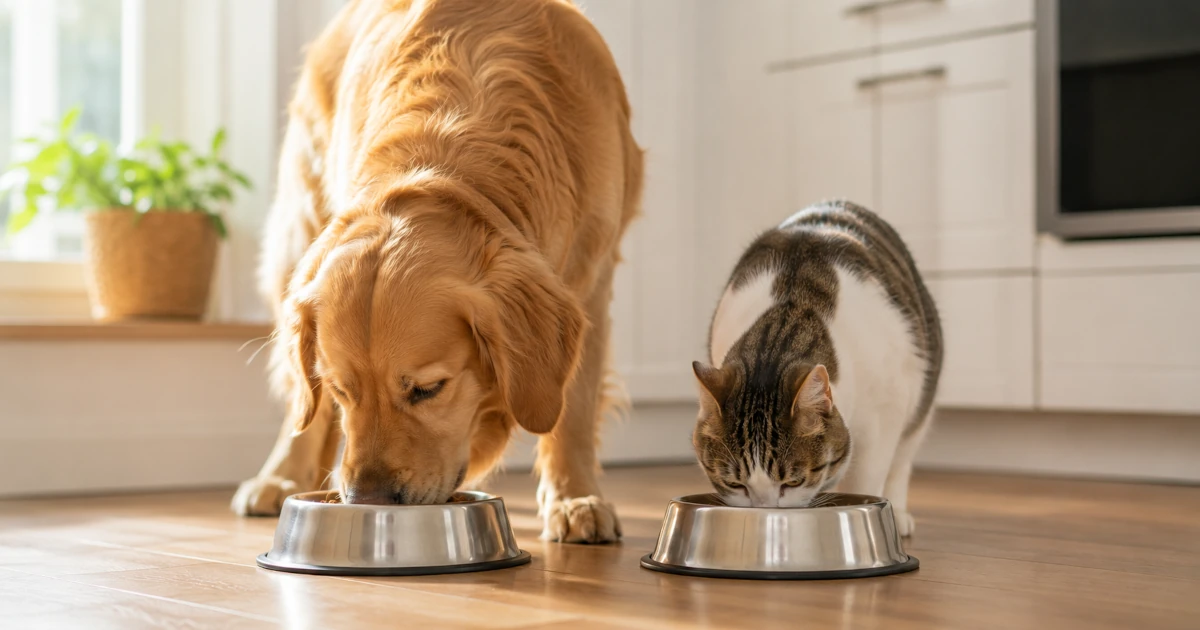
A diabetes diagnosis changes what happens at every meal, from portion timing to treat choices. Insulin only works as intended when it meets a predictable, similarly sized amount of food at roughly the same time each day. Feed too little, too much, or at the wrong hour, and the same dose that stabilized your pet last week can cause a dangerous crash or an unchecked spike.
The rules here are learnable, and for many diabetic cats, diet is one of the biggest factors influencing whether the disease goes into remission. This guide covers what to feed a diabetic dog or cat, how meal timing interacts with insulin, and the signs that mean it is time to call your veterinarian.
Key takeaways
- Meal timing tied to insulin dosing matters as much as the food itself for stable blood glucose.
- Diabetic cats often do best on a high-protein, low-carbohydrate diet, and some studies show remission rates climbing from roughly 15-25% to 50-70% when this diet starts early alongside insulin.
- Diabetic dogs generally benefit from a consistent, higher-fiber diet fed at the same 2 times daily, spaced to match insulin injections about 12 hours apart.
- Therapeutic diabetic diets are prescription-only, even on Amazon or Chewy, so choose them with your veterinarian rather than swapping on your own.
- Learn the signs of hypoglycemia, weakness, wobbliness, and tremors, before you need them, since a missed meal after insulin can turn into an emergency quickly.
Table of Contents
- How Diet and Insulin Work Together
- Feeding a Diabetic Dog
- Feeding a Diabetic Cat
- Therapeutic Diets and Why They Are Prescription-Only
- Treats and Staying Consistent
- Recognizing Hypoglycemia and Hyperglycemia
- What to Do If Your Pet Will Not Eat
- Monitoring Progress Over Time
- Frequently Asked Questions
- References
Quick answer: There is no universal feeding chart for diabetic pets: the right portion depends on your pet's target weight and your veterinarian's insulin protocol. Use the free calculator to get a baseline calorie number, then work with your vet to build the actual feeding plan around it.
How Diet and Insulin Work Together
In a healthy dog or cat, the pancreas releases insulin in proportion to how much glucose enters the bloodstream after eating, keeping blood sugar in a narrow range. In diabetes mellitus, the pancreas produces too little insulin, more common in dogs, or the body responds to it poorly, more common in cats, and glucose builds up in the blood instead of moving into cells for energy, according to the American Veterinary Medical Association. That mismatch is what drives the classic signs: increased thirst, increased urination, and weight loss despite a normal or increased appetite.
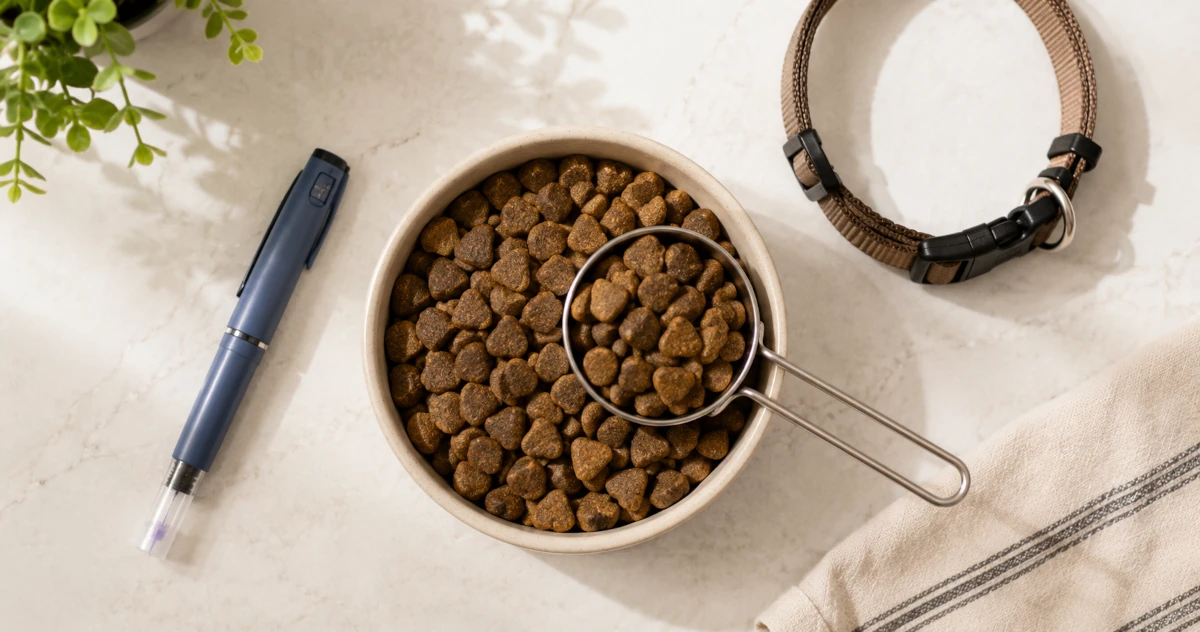
Once your pet starts insulin therapy, food becomes part of the dosing math. Vets time insulin to counteract the glucose rise from a meal, so an inconsistent feeding schedule, or a meal that is dramatically bigger or smaller than usual, throws off that balance. Most dogs and cats on insulin eat twice a day, spaced about 12 hours apart and timed to each injection, according to VCA Animal Hospitals. The specific food matters less than most owners expect. Insulin dosing follows that feeding schedule, not any particular food.
Feeding a Diabetic Dog
Dogs do not respond to diet the way cats do. Canine diabetes is closer to type 1 diabetes in humans: the pancreas has largely stopped producing insulin, so diet will not reverse the disease, but it does make blood sugar easier to control. Guidance from Cornell University's Riney Canine Health Center points to a moderate-fat, higher-fiber diet as the most consistent approach: fiber slows glucose absorption from the gut, which blunts the post-meal spike insulin has to manage.
Weight matters as much as fiber content. Overweight dogs are more insulin resistant, which can mean higher doses and less stable control. If your dog's body condition is above ideal, ask your vet whether a weight-loss plan should run alongside diabetes treatment. The body condition score guide on this site walks through how to check it at home.
Whatever diet your vet settles on, feed the exact same food, in the exact same amount, at the exact same 2 times a day. That consistency, not any single ingredient, is what makes insulin dosing predictable. The general calorie math for dogs (RER multiplied by a life-stage factor) still applies as a starting point. See the dog feeding guide for the formula, then treat the result as a baseline your vet will adjust based on how your dog's blood sugar responds.
Feeding a Diabetic Cat
Cats respond to diet differently than dogs, and more dramatically. Cats are obligate carnivores that evolved to get little energy from carbohydrates, and a high-carbohydrate diet, the kind found in most dry kibble, pushes their blood sugar harder than it should have to work. Switching a diabetic cat to a high-protein, low-carbohydrate diet, typically a canned or wet formula, is one of the few dietary interventions in veterinary medicine with real evidence behind it.
In a frequently cited study by Bennett et al., published in the Journal of Feline Medicine and Surgery in 2006, cats fed a low-carbohydrate, low-fiber diet were significantly more likely to reach good glycemic control than cats on a moderate-carbohydrate, high-fiber diet. Later research summarized by the Purina Institute reports diabetic remission rates rising from a baseline of roughly 15-25% up to 50-70% when a low-carbohydrate diet accompanies insulin therapy, especially when started soon after diagnosis. Remission means the cat's own insulin production recovers enough that the cat may no longer need injections, always under veterinary supervision. Not every cat achieves it, and it is more likely the sooner treatment starts after diagnosis.
Wet food has a second advantage for diabetic cats: it supports hydration at a time when the kidneys are working overtime to clear excess glucose. The wet vs. dry feeding guide on this site covers how to calculate portions if you are transitioning formats.
Therapeutic Diets and Why They Are Prescription-Only
Most of the diets with real evidence behind them for diabetes management, including Hill's Prescription Diet w/d, Royal Canin Glycobalance, and Purina Pro Plan Veterinary Diets DM, are sold as prescription therapeutic diets. Even through Amazon or Chewy, these require your veterinarian's authorization before checkout, because using them safely requires medical supervision, not a choice made off a shelf.
That restriction is intentional. The right therapeutic diet depends on your pet's specific insulin protocol, any other health conditions, and how their blood glucose responds over the following weeks, information only your vet has. If you are comparing options, ask your vet directly which therapeutic lines they stock or recommend, rather than ordering one based on an online review.
Get a Baseline Calorie Number
Enter your pet's weight and life stage for an estimated daily calorie need, then bring that number to your vet to fit around their insulin protocol.
🐾 Use the Free Calculator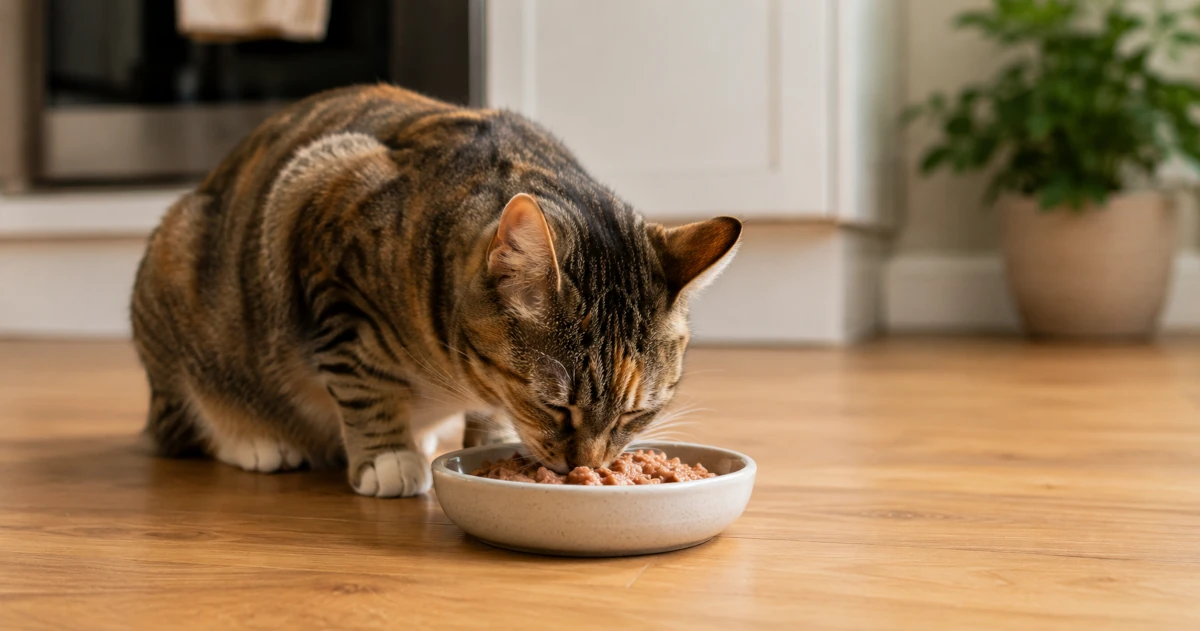
Treats and Staying Consistent
Treats are not automatically off-limits, but they do have to be accounted for. Every calorie your pet eats outside of scheduled meals is a calorie insulin has to cover, and an unplanned handful of high-carbohydrate treats can undo an otherwise well-managed day. Keep treats small, low in carbohydrate, and consistent, and ask your vet whether they should count toward the daily calorie total or be avoided entirely during the early stabilization period.
The same logic applies in multi-pet households. A diabetic cat that steals bites from a housemate's bowl, or a dog that free-feeds from an automatic feeder, makes it nearly impossible to know what went into the insulin math for that day. Separate feeding areas or supervised mealtimes solve this more reliably than trying to estimate afterward.
Recognizing Hypoglycemia and Hyperglycemia
Learn the signs of low blood sugar (hypoglycemia) before you need them, since it can escalate quickly. According to the American Kennel Club, early signs include weakness, wobbliness, and muscle tremors. Without intervention, this can progress to disorientation, seizures, or collapse. If your pet shows any of these signs, offer food right away if they are alert enough to eat, or rub a small amount of corn syrup or honey on their gums if they are not, then call your veterinarian or an emergency clinic immediately.
High blood sugar (hyperglycemia) tends to be more gradual: it looks like the original diagnostic signs returning, increased thirst, increased urination, and lethargy, and it usually signals that the current insulin dose or diet needs to be reassessed rather than an immediate emergency. Either pattern is a reason to call your vet, not to adjust the insulin dose on your own.
What to Do If Your Pet Will Not Eat
A diabetic pet that skips a meal is a bigger problem than a healthy pet doing the same, because insulin is typically already scheduled around that food. Do not give a full insulin dose to a pet that has not eaten. Insulin without enough glucose on board is what causes hypoglycemia. Vets often have a specific fallback for a missed or partial meal, sometimes a reduced dose, sometimes skipping that dose entirely, but the right call depends on your pet's insulin type, dose, and history.
Ask your veterinarian in advance what to do if your pet will not eat, so you have a plan before it happens rather than during an emergency. If your pet refuses food for more than one meal in a row, or seems unwell in addition to not eating, treat it as a reason to call the vet the same day.
🩺 Vet tip: Never adjust an insulin dose yourself based on how much your pet ate. Call your vet for the specific adjustment. The safe correction depends on the insulin type and your pet's history, not a general rule.
Monitoring Progress Over Time
Diabetes management requires ongoing adjustment, not a single fixed plan. Most vets recommend periodic blood glucose curves, done in-clinic or at home with a glucometer, to see how your pet's blood sugar responds to their current food and insulin dose over a full day. Keep a simple log of feeding times, amounts, insulin doses, and any unusual symptoms. Patterns that are not obvious day to day often show up clearly across a week or two of notes.
Body condition is worth checking regularly too, since both weight gain and unexplained weight loss can signal that the current plan needs adjusting. The body condition score guide walks through the at-home rib, waist, and abdominal-tuck check used to track this between vet visits.
Frequently Asked Questions
What should I feed my diabetic dog?
Most diabetic dogs do best on a moderate-fat, higher-fiber diet fed in the same amount at the same 2 times each day, timed to insulin injections roughly 12 hours apart. The exact formula should come from your veterinarian, since it depends on your dog's insulin protocol and any other health conditions.
What should I feed my diabetic cat?
Diabetic cats generally do best on a high-protein, low-carbohydrate diet, usually a canned or wet formula, since cats are obligate carnivores that handle carbohydrates poorly. Veterinary studies show this approach improves glycemic control and increases the odds of diabetic remission.
Can a diabetic pet's diabetes go into remission?
Remission is realistic for some cats, especially when a low-carbohydrate diet starts soon after diagnosis alongside insulin therapy. Some studies report remission rates rising from roughly 15-25% to 50-70% under these conditions. Remission is uncommon in dogs, whose diabetes more closely resembles type 1 diabetes in humans.
What if my diabetic pet won't eat?
Do not give a full insulin dose to a pet that has not eaten, since insulin without enough glucose on board can cause dangerous hypoglycemia. Ask your veterinarian in advance for a specific plan for missed or partial meals, and call them the same day if your pet skips more than one meal in a row.
How do I know if my pet's blood sugar is too low?
Early signs of hypoglycemia include weakness, wobbliness, and muscle tremors, which can progress to disorientation, seizures, or collapse if untreated. If your pet is alert, offer food immediately. If not, contact your veterinarian or an emergency clinic right away.
Can I give treats to a diabetic dog or cat?
Treats are not automatically off-limits, but every calorie counts toward what insulin has to cover. Keep treats small, low in carbohydrate, and consistent from day to day, and ask your vet whether they should be factored into the daily calorie total during the stabilization period.
How many calories should I feed my diabetic cat on insulin each day?
Start with the standard RER formula (70 × body weight in kg0.75) times a life-stage multiplier for a baseline calorie target, since diabetes does not change the underlying energy math. What changes is consistency: split that total into the same two meals, same size, same time each day, spaced about 12 hours apart to match insulin dosing. Use the free calculator for the baseline number, then confirm the target and diet type (typically high-protein, low-carbohydrate) with your veterinarian, since it factors directly into the insulin dose.
References
American Veterinary Medical Association. "Diabetes in Pets." | Bennett N, Greco DS, Peterson ME, Kirk C, Mathes M, Fettman MJ. "Comparison of a low carbohydrate-low fiber diet and a moderate carbohydrate-high fiber diet in the management of feline diabetes mellitus." Journal of Feline Medicine and Surgery 2006;8(2):73-84. | 2018 AAHA Diabetes Management Guidelines for Dogs and Cats. | Cornell University Riney Canine Health Center. "Managing Canine Diabetes."
This article is for general informational purposes and is not a substitute for individualized veterinary advice. Diabetes management requires close veterinary supervision. Consult your veterinarian before changing your diabetic dog or cat's diet, feeding schedule, or insulin timing.