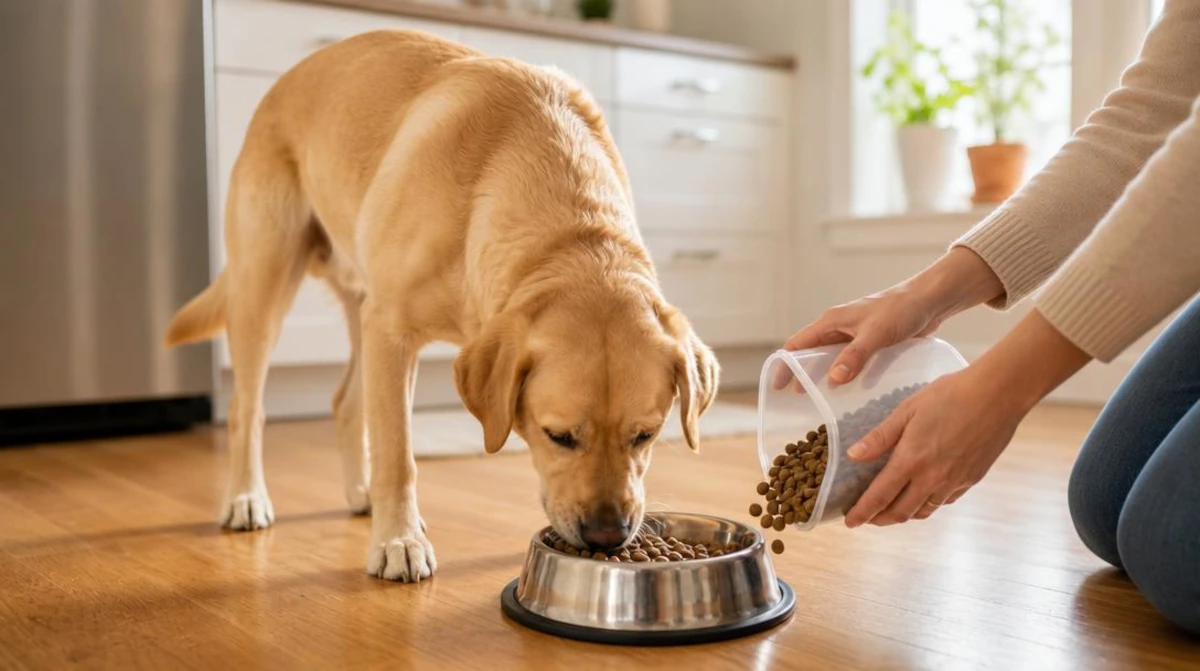
Switching your dog's food the wrong way can cause vomiting, diarrhea, or portions that leave your dog underfed or overfed during the transition. Whether the change comes from a recall, a veterinarian's recommendation, or a picky eater, safety mostly comes down to pace, and a structured transition avoids most of that risk. Many owners are searching for this guidance right now because of a recall: Years, a fresh-food subscription brand, pulled its meals this month after 57 reports of suspected dry eye disease in dogs.
This guide covers the transition timeline, how to recalculate portions on the new food, what to watch for along the way, and when to involve a vet before changing anything at all.
Key takeaways
- Most healthy adult dogs need 7 to 10 days to fully transition to a new food, mixing in increasing amounts every couple of days.
- Any dog with eye redness, cloudiness, discharge or squinting needs a vet visit before any diet change, since these signs can have several causes.
- Recalculate portions for the new food's calorie density instead of copying the amount from the old bag or package.
- Loose stool, vomiting, or appetite loss during a transition means slowing down the mix ratio rather than pushing through.
- Puppies, seniors, and dogs with health conditions often need a longer or more closely monitored transition than a healthy adult dog.
Table of Contents
- Why So Many Owners Are Switching Foods Right Now
- When Your Dog Needs a Vet Visit Before Any Diet Change
- How Many Days Should a Dog Food Transition Take
- How to Recalculate Your Dog's Portions on a New Food
- What to Watch for During the Transition
- Special Cases: Puppies, Seniors, and Dogs With Health Conditions
- Frequently Asked Questions
Quick answer: Mix the new food in gradually over 7 to 10 days, recalculate portions using the new food's calorie content, and watch stool quality and appetite along the way. Use our calculator to get NRC-based portion numbers for the new food before day one.
Why So Many Owners Are Switching Foods Right Now
A recall is the most common reason owners are searching for a safe transition method this week. Years, which sells chef-prepared fresh meals like pork shoulder and apple stew and turkey thigh and cranberry fricassee, recalled its meals in August after logging 57 reports of suspected dry eye disease, affecting about 0.1% of its roughly 40,000 customers.
The company said it identified a potential link to buckwheat, an approved ingredient in its recipes, though its investigation had not confirmed the ingredient caused the reported illnesses as of publication. Years told customers to stop feeding the meals to any animal, paused subscriptions for at least 6 weeks, and said it would reformulate recipes with quinoa instead of buckwheat while the investigation continues.
One reported case involved a dog that developed bilateral dry eye disease after eating the recalled meals for about 2.5 years, with veterinary treatment, including steroid paste, lubricating drops, and gel, estimated near £1,500. The case is a reminder that a food-related reaction can take months or years of feeding to surface, and that veterinary involvement matters more than guesswork.
7-day dog food transition schedule
When Your Dog Needs a Vet Visit Before Any Diet Change
Any dog showing red, cloudy, or dull-looking eyes, excessive blinking or squinting, pawing at the eyes, or thick discharge needs a vet exam before you touch the food bowl. These signs point to dry eye disease, also called keratoconjunctivitis sicca, which reduces tear production and causes ongoing irritation if untreated.
Eye symptoms like these can come from injury, infection, immune-related disease, or exposure to an irritant, not only diet. A vet can examine the eye surface and measure tear production to identify the actual cause before recommending treatment, and delaying that exam to "see if a food switch helps first" risks letting the underlying problem progress.
If your dog is not showing eye or digestive symptoms and you are switching for another reason, such as a recall notice, cost, or a veterinarian's general recommendation, you can move to the transition schedule below without a vet visit first. Contact your vet at any point during the switch if new symptoms show up.
How Many Days Should a Dog Food Transition Take
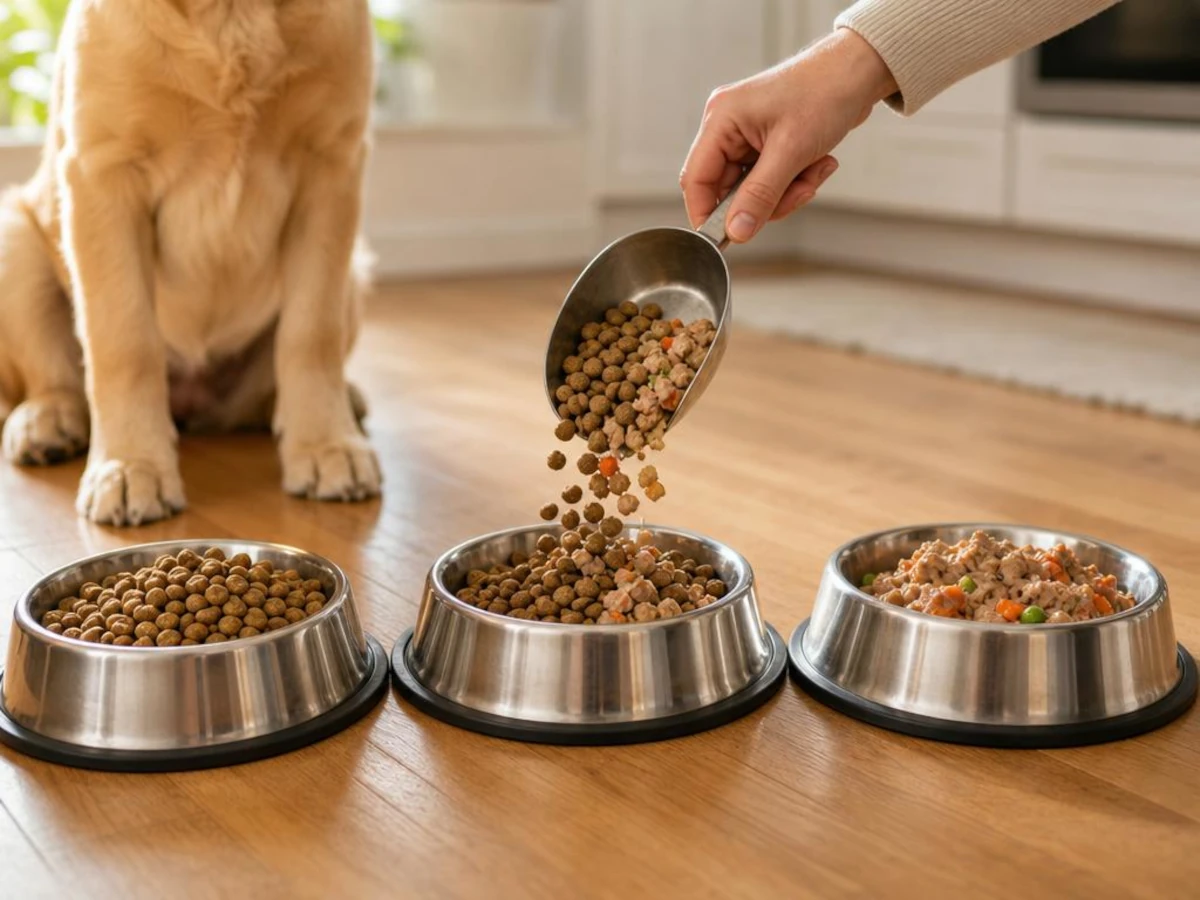
Most healthy adult dogs handle a full food switch over 7 to 10 days when the new food is mixed in gradually, according to American Animal Hospital Association guidance on pet food transitions. A standard schedule looks like 25% new food and 75% old food for the first two days, 50/50 for the next two days, 75% new and 25% old for two more days, then 100% new food on day 7.
| Day | New Food | Old Food |
|---|---|---|
| 1-2 | 25% | 75% |
| 3-4 | 50% | 50% |
| 5-6 | 75% | 25% |
| 7 | 100% | 0% |
Source: AAHA, "Take It Slowly When Transitioning Your Pet to a New Food"
Dogs with sensitive stomachs, a history of digestive upset, or an existing medical condition often need 10 to 14 days instead, extending each stage rather than compressing them. A recall forces some owners into a faster switch than they'd choose. If the old food is unavailable, a 3 to 5 day transition using whatever overlap is possible, even a small amount of bone broth or plain boiled chicken mixed with the new food for the first couple of days, softens the change more than an abrupt swap.
Before day one, run the new food's numbers through our fresh food calculator so the portions are correct from the first mixed meal instead of only after the transition finishes.
How to Recalculate Your Dog's Portions on a New Food
A cup-for-cup or can-for-can swap between 2 foods is one of the more common ways owners accidentally over- or underfeed a dog during a transition. Calorie density varies significantly between brands and recipes, so the same volume of 2 different foods can deliver a very different number of calories.
The National Research Council's resting energy requirement (RER) and maintenance energy requirement (MER) formulas account for a dog's weight, life stage, and activity level to estimate daily calorie needs, then divide that target by the new food's calories per cup or per can to get an actual portion size. Our calculator runs this math using the new food's label information, so the numbers update automatically when the food changes, instead of relying on a generic feeding chart that assumes an average dog.
Recalculating matters most in the first week of a switch, when the dog is also getting less of the old food each day. Splitting the new total into 2 or 3 meals, rather than one large feeding, tends to reduce stomach upset during the overlap period.
Get the New Food's Exact Portions
Enter your dog's weight, age, and activity level for an NRC-based daily amount for whatever food comes next.
🐾 Use the Free CalculatorWhat to Watch for During the Transition
Stool quality, appetite, energy level, coat condition, and vomiting or diarrhea are the 5 signals worth tracking during a food switch. Firm, well-formed stool and a normal appetite by day 3 or 4 of a stage suggest the dog is tolerating that ratio and it is safe to move to the next one.
Loose stool for a day or two as the ratio shifts is common and not usually a reason to stop. Vomiting, diarrhea lasting more than a day, refusal to eat, or unusual lethargy are different: those signs mean holding at the current ratio, or dropping back a stage, rather than advancing on schedule. If symptoms persist for more than 48 hours at any stage, a vet visit rules out a food intolerance or an unrelated illness.
A written log, even a simple note on a phone, of what ratio the dog was on when a symptom appeared makes it easier to identify which change caused a reaction, particularly useful information to bring to a vet if the transition does not go smoothly.
Special Cases: Puppies, Seniors, and Dogs With Health Conditions
Puppies, senior dogs, and dogs with an existing medical condition generally need a slower, more closely watched transition than a healthy adult. Each group has a different reason for that caution.
Puppies are still developing their digestive systems and are moving toward a lower-calorie adult formula at the same time, which is a separate calculation from a same-life-stage food switch. Our puppy-to-adult transition guide covers that timeline by breed size in more detail.
Senior dogs often carry age-related digestive sensitivity or chronic conditions like kidney disease that make a fast diet change riskier, and portion needs can shift substantially with age and activity. A vet check before switching is worth the appointment for most senior dogs, particularly if the new food differs meaningfully in protein or fat content from the old one.
Dogs managing diabetes, food allergies, or a history of pancreatitis need their vet involved in choosing the new food itself, not only the transition pace, since some ingredients or formulations can affect blood sugar control or trigger a flare. Our guide to feeding a diabetic dog or cat covers what changes for that group specifically.
Frequently Asked Questions
How many days does it take to safely switch dog food?
Most healthy adult dogs adjust to a new food over 7 to 10 days using a gradual mixing schedule. Dogs with sensitive stomachs or a history of digestive upset often need 10 to 14 days, and the pace should follow the dog's response rather than a fixed calendar.
Can I switch dog food faster if I have to due to a recall?
A forced switch from a recall can be compressed to 3 to 5 days if needed, but it raises the odds of loose stool or appetite changes. Watch the dog closely during a fast transition and slow down at the first sign of digestive upset.
Why does my dog need different portions on a new food?
Every recipe has its own calorie density, so a cup-for-cup or can-for-can swap rarely delivers the same number of calories as the old food. Recalculate portions from the new food's calorie content and your dog's daily energy needs instead of copying them from the old feeding guide.
What symptoms mean I should stop the food switch and call the vet?
Repeated vomiting, diarrhea lasting more than a day, refusal to eat, or any eye changes such as redness, cloudiness, discharge or squinting warrant a call to the vet. These signs can point to a reaction to the new food or to an unrelated condition that needs its own diagnosis.
This article is for general information only and does not replace advice from a veterinarian. If your dog is showing eye symptoms, digestive symptoms, or any other signs of illness, contact a vet promptly rather than relying on dietary changes alone.