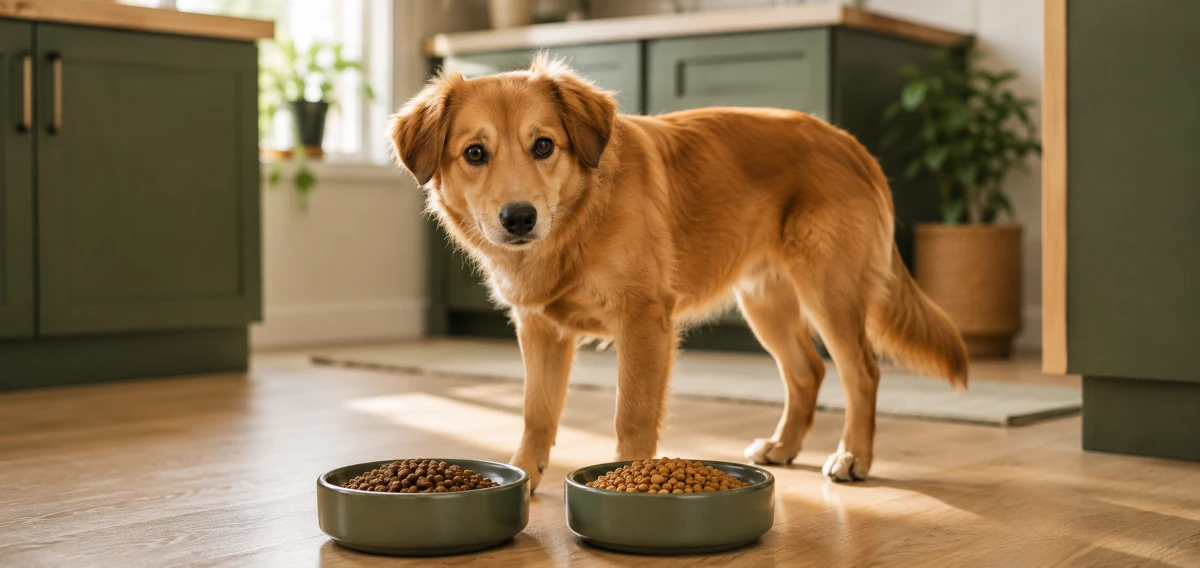
Somewhere between 9 months and 2 years old, depending on breed size, a puppy stops needing puppy food. The switch to adult food changes more than the bag on the shelf. It comes with a real drop in daily calories, and feeding the new food at the old amount is one of the more common ways young dogs start gaining weight right as they reach adulthood.
This guide covers when your dog is ready for the switch, how much less to feed once you make it, and the gradual schedule that gets there without stomach upset.
Key takeaways
- Puppies are generally ready for adult food around 80% of their adult size, which lands at 9-10 months for small breeds and 14-24 months for large breeds.
- The daily calorie target usually drops by close to half at the switch, since puppy life-stage multipliers run 2.0-3.0x RER versus 1.6-1.8x RER for an adult at moderate activity.
- Transition over 5 to 7 days by gradually increasing the proportion of adult food, rather than switching in one meal.
- Spaying or neutering before the switch can lower calorie needs by up to 30% on top of the food-type change.
- Recheck body condition score 2 to 4 weeks after the transition is complete, and adjust the amount by about 10% if needed.
Table of Contents
Quick answer: Once your dog is ready for the switch, recalculate using an adult multiplier instead of a puppy one. Use the free calculator with your dog's current weight and adult life stage for the new daily target, then transition the food itself over 5 to 7 days.
When Your Puppy Is Ready for Adult Food
A puppy is generally ready for adult food once it reaches about 80% of its expected adult size, a threshold that lands at different ages depending on breed. According to PetMD, small breeds under 25 lb are typically ready at 9-10 months, medium breeds (25-50 lb) at 12-14 months, and large breeds over 50 lb often need to stay on puppy food until 14-24 months.
| Breed Size | Adult Weight | Ready for Adult Food |
|---|---|---|
| Small | Under 25 lb | 9-10 months |
| Medium | 25-50 lb | 12-14 months |
| Large | Over 50 lb | 14-24 months |
Source: PetMD, "When Should You Switch From Puppy to Adult Dog Food?" For a full age-by-age breakdown for one large breed specifically, see the Labrador puppy feeding guide.
How Much to Feed the Day You Switch
The daily amount usually drops by close to half at the switch, because puppy and adult foods run on entirely different life-stage multipliers. A growing puppy under 4 months needs about 3.0 times its Resting Energy Requirement (RER), tapering to roughly 2.0 times RER from 4 months to a year. An adult dog at moderate activity needs only 1.6 to 1.8 times RER, depending on spay/neuter status.
For a 40 lb dog nearing the end of puppyhood (18.1 kg, RER ≈ 616 kcal), the puppy-stage target at 2.0x RER is about 1,232 kcal/day. The same dog recalculated as a neutered adult at moderate activity (1.6x RER) needs closer to 986 kcal/day, a drop of roughly 246 kcal even before accounting for the adult food's typically lower calorie density per cup. Recalculate with the calculator using your dog's current weight and adult life stage rather than estimating the cut by feel.
The 5 to 7 Day Transition Schedule
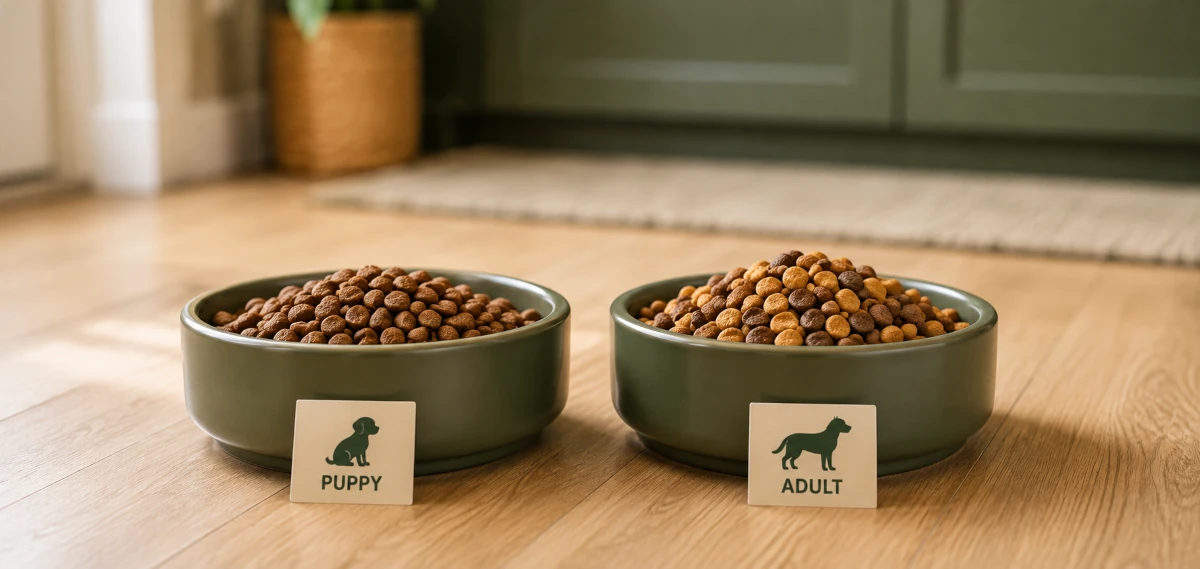
Switch the food itself gradually, not all at once. Rapid diet changes are a common cause of vomiting and diarrhea in dogs, so veterinary guidance calls for mixing increasing amounts of adult food into the puppy food over about 5 to 7 days.
5-day puppy-to-adult food transition
Source: PetMD. Slow the pace over a few extra days if your dog shows loose stool at any stage.
Keep your dog on its usual number of meals throughout the transition rather than changing meal frequency and food type at the same time. If vomiting, diarrhea, or appetite loss shows up at any point, hold at the current ratio for an extra day or two before moving forward, and contact your veterinarian if symptoms do not settle.
Why Some Dogs Need a Different Timeline
Breed size is not the only variable. Spaying or neutering before a puppy reaches about 80% of adult size can lower calorie needs by up to 30%, on top of whatever drop comes from the food switch itself, according to PetMD's veterinary guidance. A puppy fixed shortly before the transition needs that reduction factored in, not layered on top of the standard adult recalculation as an afterthought.
Large-breed puppies have their own designation entirely. The Association of American Feed Control Officials recognizes a separate "growth of large size dogs" nutrient profile for dogs expected to weigh over 70 lb as adults, formulated with tighter calcium and phosphorus limits to moderate growth rate and reduce the risk of skeletal problems like hip and elbow dysplasia. These dogs should stay on a large-breed puppy formula for the full 14-24 month window rather than switching early because a sibling or a smaller breed switched sooner.
Recalculate for Your Dog's New Life Stage
Enter your dog's current weight and select adult life stage for a personalized post-transition calorie target.
🐾 Use the Free CalculatorChecking the Switch Worked
Give the new amount 2 to 4 weeks before judging it, then check Body Condition Score the same way you would for any portion change. Ribs should be easy to feel without pressing hard, and a visible waist should show from above. Adjust the daily total by about 10% if either check is off, and hold the new amount for another two weeks before reassessing again.
If weight keeps drifting the wrong way despite an accurate, consistently measured portion, troubleshoot the feeding plan rather than continuing to guess at adjustments. For help converting the new calorie target into an actual cup measurement for your specific adult food, see the dry food calculator guide.
Frequently Asked Questions
How much less food does a dog need right after switching to adult food?
Substantially less. Puppy multipliers run from 2.0 to 3.0 times Resting Energy Requirement depending on age, while an adult dog at moderate activity typically needs 1.6 to 1.8 times RER, so the daily target usually drops by close to half even before accounting for the lower calorie density of most adult formulas.
Can I switch my puppy to adult food all at once?
It is not recommended. A sudden switch can cause vomiting or diarrhea. Veterinary guidance generally calls for a gradual transition over about 5 to 7 days, increasing the proportion of adult food a little each day.
What if my puppy was spayed or neutered before the switch?
Calorie needs can drop by up to 30% after spay or neuter surgery performed before a puppy reaches about 80% of adult size, on top of the drop from switching food types. Recalculate rather than assuming the standard puppy-to-adult adjustment already covers it.
Should large breed puppies switch to adult food at the same age as small breeds?
No. Large breed puppies, generally dogs expected to weigh over 70 lb as adults, grow for longer and typically stay on a large-breed puppy formula until somewhere between 14 and 24 months, well past the 9 to 10 months common for small breeds.
How do I know if the new adult portion is correct?
Check body condition score two to four weeks after finishing the transition. Ribs should be easy to feel without pressing hard, and a waist should be visible from above. Adjust the daily amount by about 10% if either check is off.
This article is for general informational purposes and is not a substitute for individualized veterinary advice. Consult your veterinarian about the right timing and diet for your puppy, especially for breeds with known growth or joint concerns.